
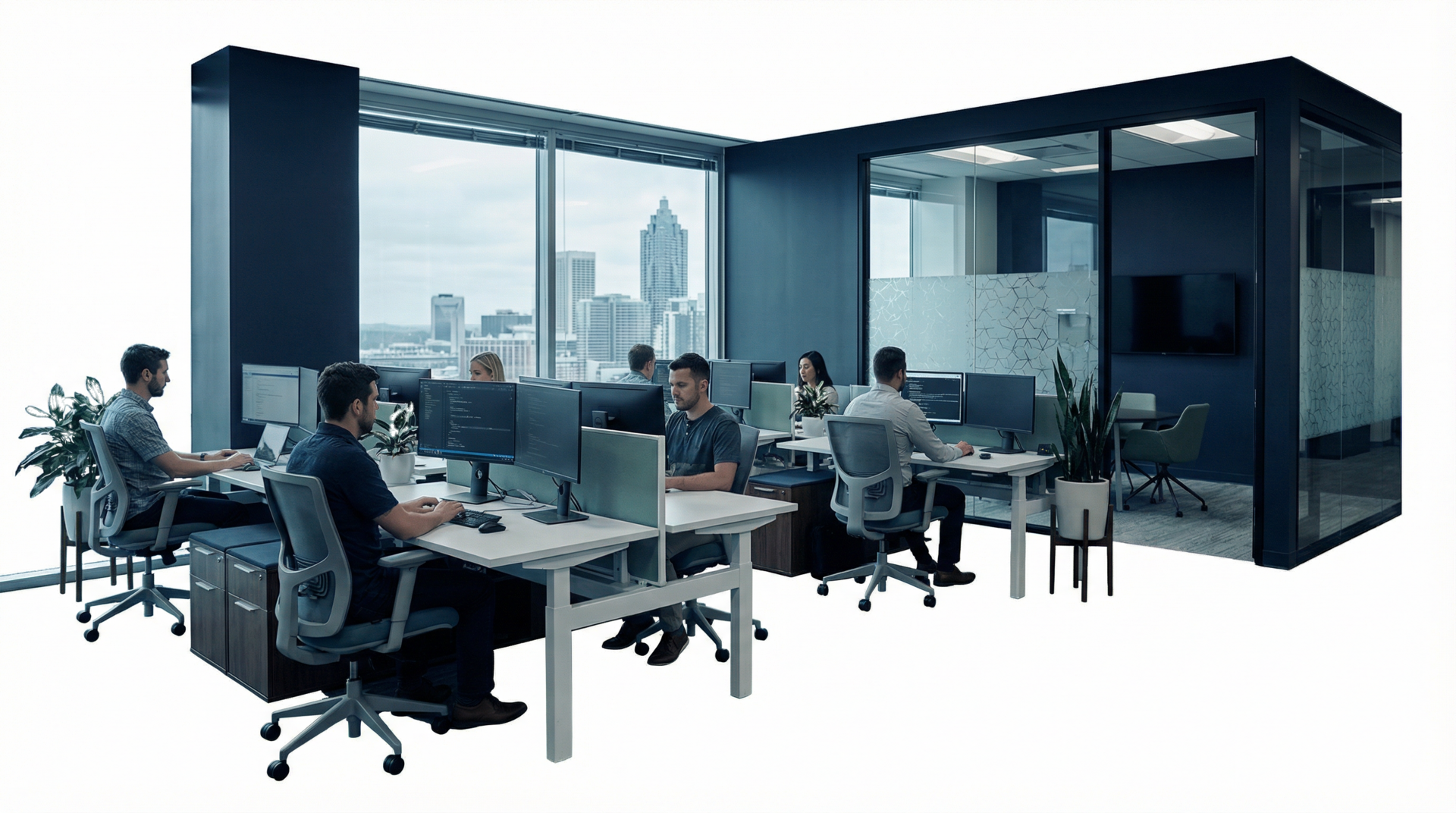
I still remember the hum of the server rooms at IBM in the late 90s. It was a different world—one where "cloud" referred to the weather and "deployment" meant physically loading tapes. Over the last 27 years, I've witnessed the tectonic shifts of the IT industry firsthand, from the monolithic architectures of the dot-com boom to the agile, microservices-driven ecosystems of today.
The Shift from "Build to Last" to "Build to Change"
Early in my career at AT&T, the philosophy was simple: build it once, build it robust, and hope you never have to touch it again. Stability was the only metric that mattered. While stability is still crucial, the paradigm has shifted. Today, the most successful enterprises aren't the ones with the most unshakeable codebases, but the ones with the most adaptable ones.
We've moved from "Build to Last" to "Build to Change." This is why at Kingston Apps, we prioritize modular architecture. We know that the requirements you have today will not be the requirements you have next year. Your software needs to be a living organism, capable of evolving without collapsing under its own weight.
Complexity is the New Enemy
During my time consulting for Fortune 10 companies, I saw millions of dollars wasted on "kitchen sink" solutions—platforms that tried to do everything and ended up doing nothing well. The allure of the all-in-one suite is strong, but it's often a trap.
The lesson here is simplicity. Not simplicity in function, but simplicity in design. It takes more effort to build a clean, focused interface than a cluttered one. It takes more skill to write concise, readable code than verbose, "clever" scripts. Complexity is the silent killer of velocity.
The Human Element Remains Constant
Technology changes every 18 months. People don't. Whether I was working with a small team at a startup or leading a division at Capgemini, the fundamental challenges were always human: communication, alignment, and trust.
This is why I founded Kingston Apps. I wanted to create a firm that didn't just throw code over the wall. We operate on the belief that software development is a social activity. We embed ourselves in your team, we speak your language, and we care about your business outcomes as much as you do.
Looking Forward
As we stand on the precipice of the AI revolution, the fundamentals I've learned over 27 years are more relevant than ever. The tools will change—AI agents, quantum computing, edge networks—but the principles of adaptability, simplicity, and partnership will remain the bedrock of successful enterprise IT.
We are building the digital infrastructure of tomorrow, today. And we're just getting started.